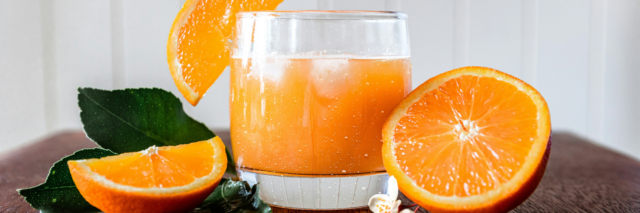
A glass of fresh-squeezed OJ feels like the ultimate healthy morning ritual. But is it as good for you as it seems? It’s packed with vitamin C, potassium, and powerful antioxidants – but it also delivers a significant sugar hit that isn’t right for everyone. Here’s what you need to know.
How many calories are in orange juice?
One glass of 100% fresh orange juice delivers around 120 calories, the same as two medium-sized whole oranges (1).
Orange juice contains 86% water, making it a good option for quick rehydration after an intense workout (1).
Fresh orange juice is almost completely free of fat, saturated and trans fats, and cholesterol. It is not a good source of protein, containing only about 2 grams per glass (1).
How much sugar does orange juice have?
One glass of fresh orange juice delivers 25 grams of carbohydrates, of which 20 grams are simple sugars (1).
Sugars from orange juice carry an important metabolic catch: a high glycemic load (2,3). Specifically, a glass of orange juice contains a significantly higher amount of sugars and calories than one whole orange (1). Plus, it takes much longer to eat whole oranges, whereas you can down a glass of juice in no time. Because of this, orange juice causes a much faster and greater spike in blood sugar level. Over time, this daily sugar spike can contribute to insulin resistance, raising the risk of type 2 diabetes, and obesity (3).
What are the health benefits of drinking orange juice?
Fresh orange juice is packed with vitamin C, a powerful antioxidant that acts like a shield for your cells and supports immunity. Vitamin C is also essential for building collagen and it enhances the absorption of non-heme iron from plant-based foods (5).
It is also loaded with potassium, a heart-healthy mineral that helps lower blood pressure and slashes your risk of stroke and cardiovascular disease (6).
An additional benefit comes from the flavonoids in fresh orange juice, which act as antioxidants to protect your cells from damage.
For individuals who are undernourished or recovering from respiratory infections, like a cold or the flu, its dense nutrient profile provides an easily digestible vitamin, antioxidant, and energy boost.
Smart ways to enjoy 100 % fresh orange juice
- While 100% orange juice can count toward your daily fruit intake, it is best to choose whole fruits when possible. Take a small serving (4 oz. or ½ cup) and dilute it with water.
- If you have a cold or the flu, drink it to give the body quick vitamins and a boost of hydration.
- Combine juice with a meal containing lean protein, fiber, and healthy fats in order to slow down the rise in blood sugar (4).
- Add just 1 oz, or a splash, to sparkling water or tea to enhance the flavor.
- Drink it after an intense workout for rehydration and recovery.
- Use it as a quick remedy in the event of a blood sugar drop (hypoglycemia) (4).
- Skip orange juice if you have sore throat, or gastric reflux, as it may increase irritation.
Keep in mind: You should eat a variety of colorful fruits and veggies every day—aim for 2 servings of fruit and 3 servings of vegetables (7,8).
Check out some ways to enjoy oranges and fresh orange juice using these recipes!
References
- U.S. Department of Agriculture, Agricultural Research Service. FoodData Central. https://fdc.nal.usda.gov/food-details/2709187/nutrients
- The University of Sydney Glycemic Index Database. https://glycemicindex.com/
- Diabetes.co.uk. Glycemic Load. https://www.diabetes.co.uk/diet/glycemic-load.html
- American Diabetes Association, Healthy Eating Blog. Best Beverages for People with Diabetes. https://diabetesfoodhub.org/blog/best-beverages-people-diabetes
- National Institutes of Health (US), Office of Dietary Supplements. Vitamin C fact sheet for consumers. https://ods.od.nih.gov/factsheets/VitaminC-Consumer/
- National Institutes of Health (US), Office of Dietary Supplements. Potassium fact sheet for consumers. https://ods.od.nih.gov/factsheets/Potassium-Consumer/
- U.S. Department of Agriculture; U.S. Department of Health and Human Services. Dietary guidelines for Americans, 2025–2030. 10th ed. Washington (DC): U.S. Government Publishing Office; 2025. https://www.dietaryguidelines.gov/
- U.S. Department of Agriculture; U.S. Department of Health and Human Services. Dietary guidelines for Americans, 2020–2025. 9th ed. Washington (DC): U.S. Government Publishing Office; 2020. https://www.dietaryguidelines.gov/about-dietary-guidelines/previous-editions/2020-dietary-guidelines