Chestnuts
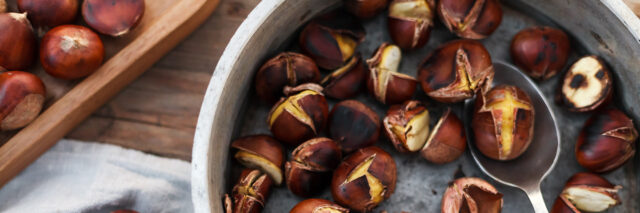
When we smell the scent of roasted chestnuts during the autumn months, we know that winter is just around the corner. Chestnuts have been a favorite since ancient times. Roman legions brought them from Asia, and due to their pleasant taste, they quickly spread across the Mediterranean and later to the northern parts of Europe and America.
Botanical Heritage
Chestnuts grow on long-lived trees that can survive for up to 500 years, with each burr producing two to three fruits. The highest quality varieties of sweet chestnuts are marrons, which originate from the Greek province of Thessaly. They are sweeter and larger than other types, with a shinier shell that easily peels off.
Select
When buying chestnuts, choose fruits that are large, heavy, and shiny, with no holes in the shell.
Store
Store chestnuts in refrigerator for up to 2 months in a plastic bag.
Preparation
Score chestnuts on the side and cover with aluminum foil so they roast and steam in their own juices simultaneously in the oven. Chestnuts can also be roasted in a microwave oven.
Culinary Applications
Peeled chestnuts can be cooked in water, wine, or milk to prepare both savory and sweet specialties. Chestnut puree with sauce is an excellent accompaniment to savory dishes, and whole chestnuts can be used for stuffing turkey, duck, and chicken, or as a side dish for veal. Pureed chestnuts are also used to make various cakes and pastries, and they are frequently consumed as chestnut puree with added sugar and whipped cream, which is a favorite winter treat in some European countries.
Nutrition benefits
- The caloric value of 100 g of roasted chestnuts is about 250 kcal.
- High in fiber: Chestnuts are among the fruits with the highest fiber content, providing around 5.5 g per 100 g of roasted or boiled chestnuts. Dietary fiber is extremely important in the prevention and treatment of constipation, contributing to gut health and helping prevent various digestive disorders and cancers.
- Potassium Rich: Contains about 500 mg of potassium per 100 g of roasted chestnuts, supporting cardiovascular health.
- Low Fat Profile: Contains very low amounts of fat, only 2 g per 100 g of roasted chestnuts.
- Complex Carbohydrates: Provides about 53 g of carbohydrates per 100 g, predominantly starches.
- Gut Microbiota: Combined dietary fiber and starch exert a prebiotic effect on the intestinal microbiota.
Clinical Note: Chestnuts are not recommended for individuals with elevated blood potassium levels, such as those with renal insufficiency. Also, it is not recommended for people who need to consume easily digestible foods, as in the case of severe digestive tract disorders. Due to their high carbohydrate content, people with diabetes should consume chestnuts cautiously and in smaller quantities.
| Component | kcal | Protein | Carbohydrates | Fiber | Fat | Potassium |
| Chestnut, roasted (10 kernels, 85 g) | 205 | 2.7 g | 43 g | 4.3 g | 1.8 g | 500 mg |
| Milk 1% fat (1 cup) | 105 | 8 g | 12 g | 0 g | 2.4 g | 360 mg |
| Total | 310 | 10.7 g | 55 g | 4.3 g | 4.2 g | 860 mg |
Serve
For four people, roast 600 g of chestnuts, and after roasting and peeling, you will get about 350 g of delicious fruit. Serve the chestnuts with a cup of 1% milk, which is an excellent source of protein and calcium. You will have a very healthy and tasty snack with well-balanced nutrients that is inexpensive, easy to prepare, and—importantly—great fun!